Regulatory Nuances Influencing Payment Security in Austria's Mobile Casino Sector
Parker Frank · Aug 28, 2026
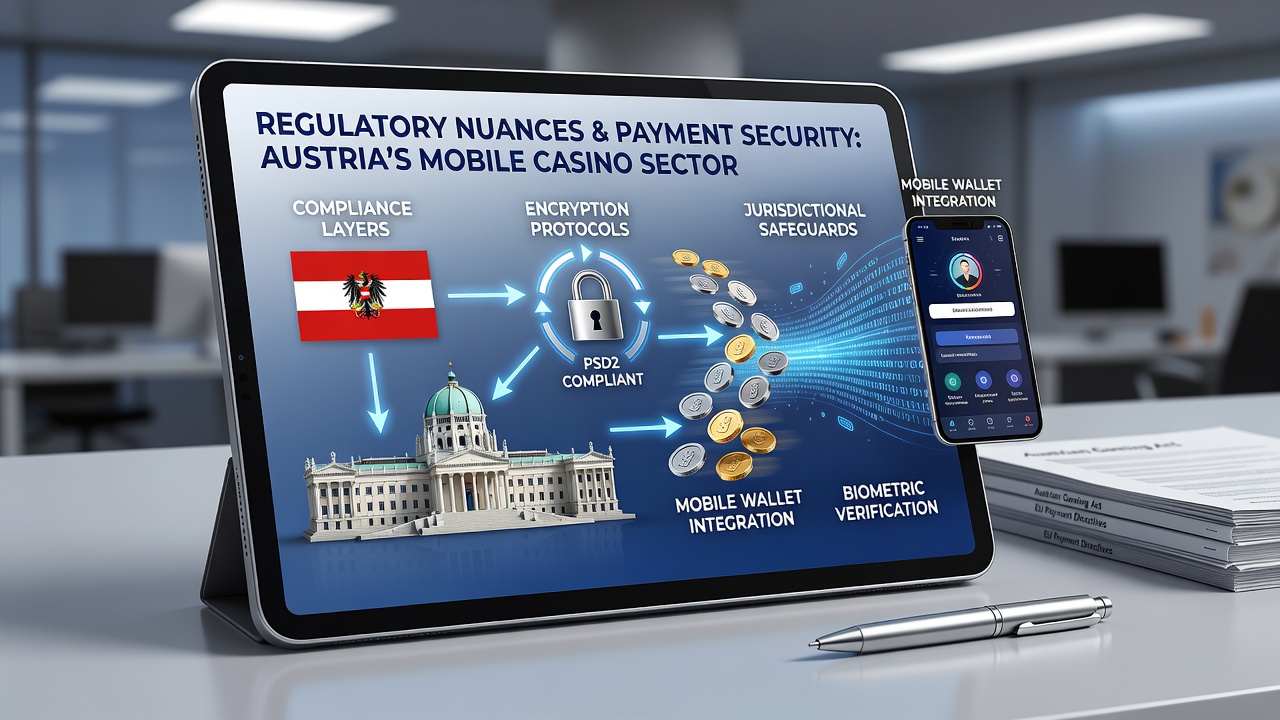
Regulatory Nuances Influencing Payment Security in Austria's Mobile Casino Sector
Payment security in Austria's mobile casino sector operates under a layered regulatory structure that combines national licensing requirements with European Union directives on financial services, and operators must navigate these rules to maintain compliant transaction processing, data encryption standards, and anti-money laundering protocols while supporting seamless user experiences on smartphones and tablets.
Core Austrian Licensing and Payment Oversight
Austria maintains strict controls through the Glücksspielgesetz, which designates authorized entities for online gambling activities, and the Financial Market Authority (FMA) monitors payment flows to ensure that licensed platforms adhere to segregation of player funds and secure banking integrations, with mobile operators required to implement strong customer authentication methods that align with the revised Payment Services Directive (PSD2) across the EU.
Those who examine the framework note that mobile casino payments often route through licensed financial institutions or approved e-wallet providers, because direct credit card processing faces additional scrutiny to prevent unauthorized charges and fraud patterns that have appeared in cross-border transactions.
Security Standards adn Technological Mandates
Encryption protocols and tokenization requirements form the backbone of compliance efforts, and Austrian regulations reference ISO 27001 certification alongside PCI DSS standards for any entity handling card data in mobile environments, while real-time monitoring systems must flag suspicious activity patterns that could indicate money laundering or account takeovers.
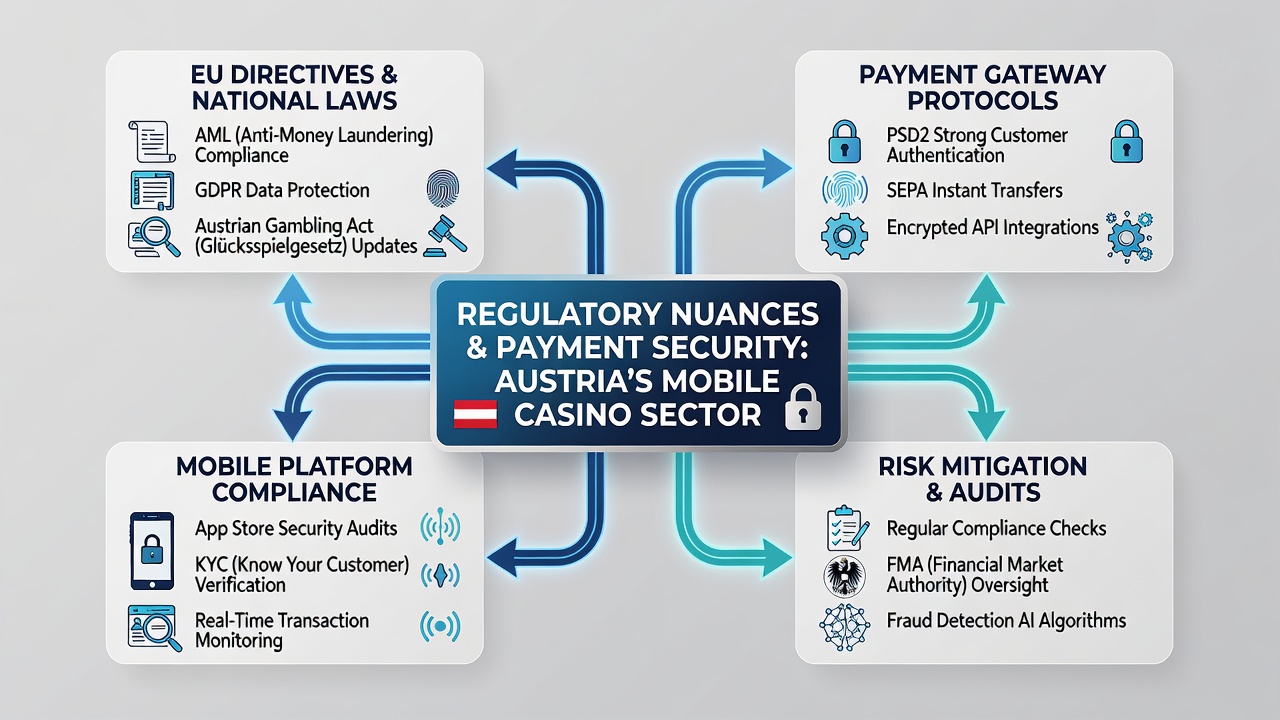
Data from the European Banking Authority indicates that strong customer authentication reduces unauthorized mobile transactions by significant margins in regulated markets, and Austrian operators integrate biometric verification alongside one-time passwords to meet these benchmarks without disrupting gameplay flow.
Emerging Developments Around August 2026
Regulatory updates scheduled for implementation near August 2026 focus on enhanced digital identity verification for mobile gambling accounts, and these changes build on existing EU-wide efforts to standardize open banking interfaces that allow casinos to verify player balances and transaction histories through secure APIs rather than manual checks.
Observers tracking the Austrian market point out that forthcoming rules will also address cryptocurrency payment options, requiring operators to apply the same anti-money laundering checks used for fiat currencies, because several platforms have begun testing blockchain-based deposits that must still route through licensed gateways to remain legal.
Cross-Border and Consumer Protection Elements
Because many Austrian users access international platforms, regulators emphasize cooperation with bodies such as the Austrian Financial Market Authority and equivalent agencies in neighboring countries to share intelligence on payment fraud networks, while consumer protection measures include mandatory cooling-off periods for deposits and clear disclosure of transaction fees on mobile interfaces.
Research from academic sources on digital payments shows that jurisdictions with integrated regulatory sandboxes, like those explored in parts of Canada and Australia, achieve faster adoption of secure mobile technologies, and Austria has drawn from these models when refining its own testing environments for new payment solutions in the gambling sector.
Conclusion
The interplay between national licensing, EU financial directives, and technological mandates creates a dynamic environment for payment security in Austria's mobile casino operations, and continued alignment with evolving standards through 2026 will shape how operators manage verification, encryption, and fraud prevention while serving their user base.